Background
A Vision for Light. A Problem with Weight.
Architect Thomas Phifer had a specific and exacting vision for the new wing of the North Carolina Museum of Art: a ceiling that didn't feel like a ceiling. Not a surface you looked at, but one that dissolved into an even, diffuse wash of natural light — illuminating the art without directing the eye anywhere in particular.
The design solution was 360 large-scale ceiling coffers, parametric in shape, each one acting as a soft lens for daylight entering from above. Together, they would create gallery-quality illumination that is extraordinarily difficult to achieve through conventional means.
The problem was structural. Phifer's team had built a full-size mock-up of the coffers in GFRG. The aesthetic was exactly right. But when the aggregate weight of 360 GFRG panels was calculated, it was immediately clear that the ceiling structure — already built — could not carry it. The project was technically stalled before it had begun.
"The original design was right. The material it was made from was wrong."
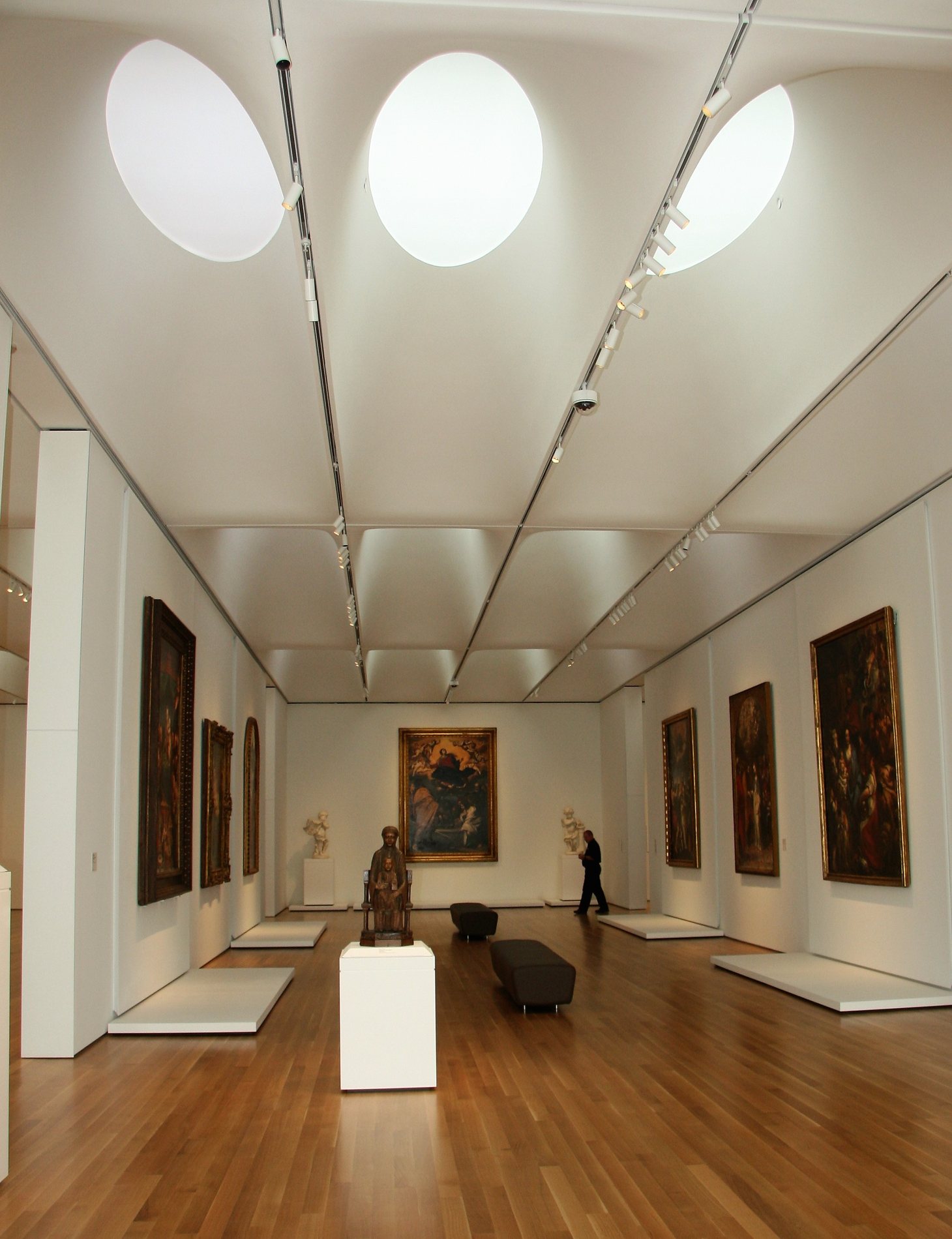
NCMA gallery — the completed FRP coffer field producing an even diffuse light across the collection spaces.
The Solution
Same Profile. A Fraction of the Weight.
Wilson Composites engineered a very thin FRP laminate — drawing weight out of every possible surface without compromising structural performance or the dimensional accuracy of the original GFRG profile. The result was a panel that matched the design intent while coming in well within the ceiling's design load.
The surface finish presented its own challenge. Because the coffers were designed to receive and reflect light, any dimpling or unevenness would read immediately under the diffuse illumination they were designed to create. The team spent considerable time in post-production finishing. In the end, the panels were painted — which turned out to be an improvement. The painted finish was more even, more controlled, and better suited to the light-handling requirements than the raw gel coat would have been.
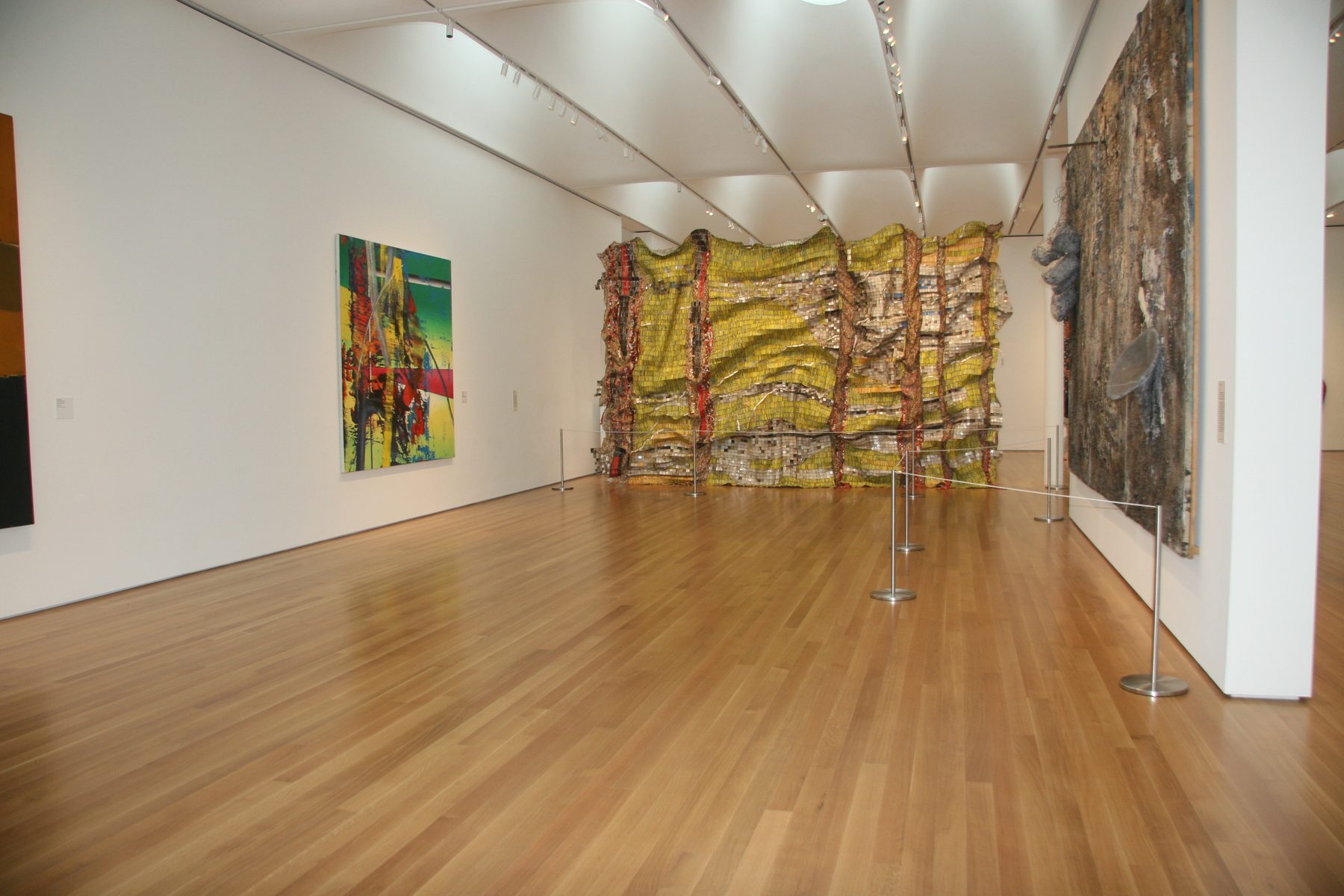
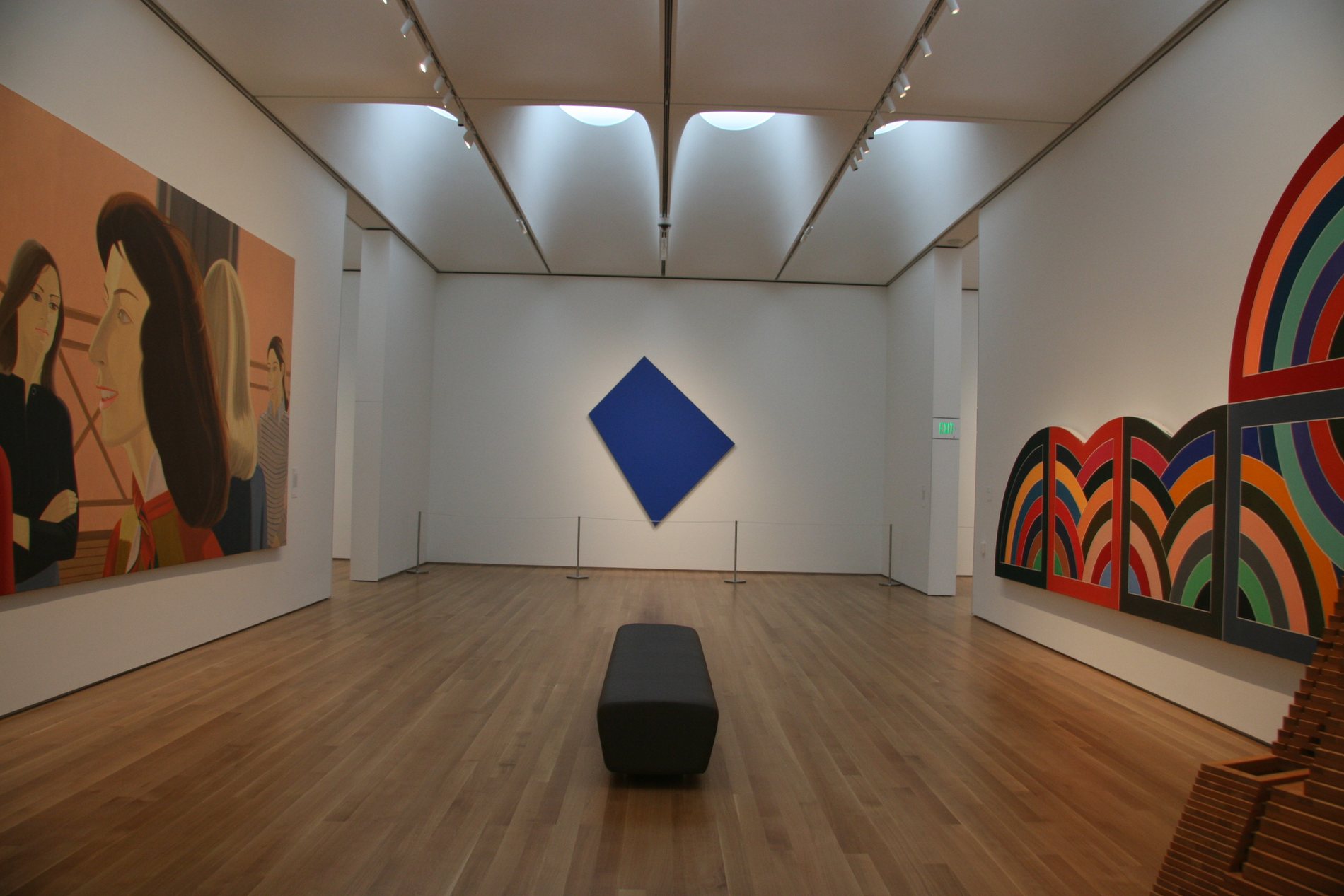
Left: antiquities gallery — two coffers glowing as light lenses. Right: modern art gallery — three coffers across the ceiling span.
Production at Scale
360 Panels. 45 Truckloads. One Factory.
Wilson Composites committed an entire factory to the project. Four molds ran simultaneously, two shifts a day, producing four panels every 24 hours — enough to fill a truck every two days. Forty-five truckloads in total, each carrying eight panels stacked two deep, four across, moving on a schedule tight enough to keep the installation crew ahead of the critical path.
Panels of this size — parametric in form, painted to a finish standard, and structurally loaded — demanded handling protocols that prevented damage without slowing throughput. Getting it right in the factory mattered. Getting it right in transit mattered equally.
FRP coffer panel in fabrication — the thin laminate construction that solved the weight-to-ceiling-load constraint.
"From inside the gallery, the ceiling does what the architect intended: it disappears."