Case Study · Historic Restoration · FRP
When the Original Stone Was Gone, We Built It Back.
How Wilson Composites restored the Marshall County Courthouse after an EF3 tornado destroyed what took 130 years to build.
How Wilson Composites restored the Marshall County Courthouse after an EF3 tornado destroyed what took 130 years to build.
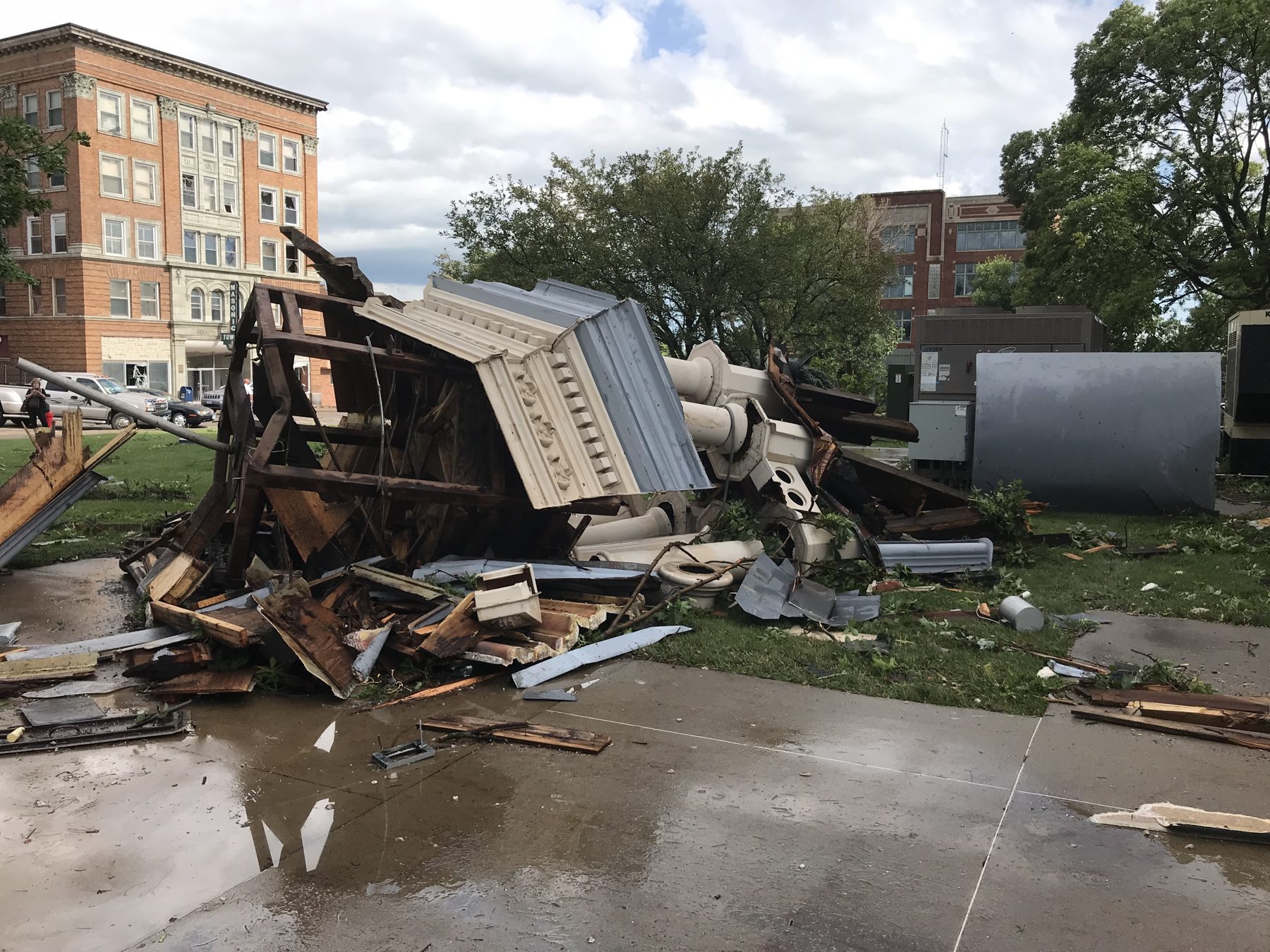
On July 19, 2018, an EF3 tornado struck Marshalltown, Iowa. Among the casualties was the Marshall County Courthouse — an 1886 Second Empire landmark whose stone cornices, decorative dormers, and ornamental facade elements were destroyed or severely damaged by the storm.
The challenge put to the restoration team was precise: rebuild the missing and damaged elements to match the original appearance, at a weight and cost that the existing structure could support. Traditional stone replacement was ruled out. The profiles were too complex, the weight too significant, and the structural implications too costly to resolve.
FRP was the answer — but not off-the-shelf FRP. The profiles had to be exact. The debris from the original building became the molds.
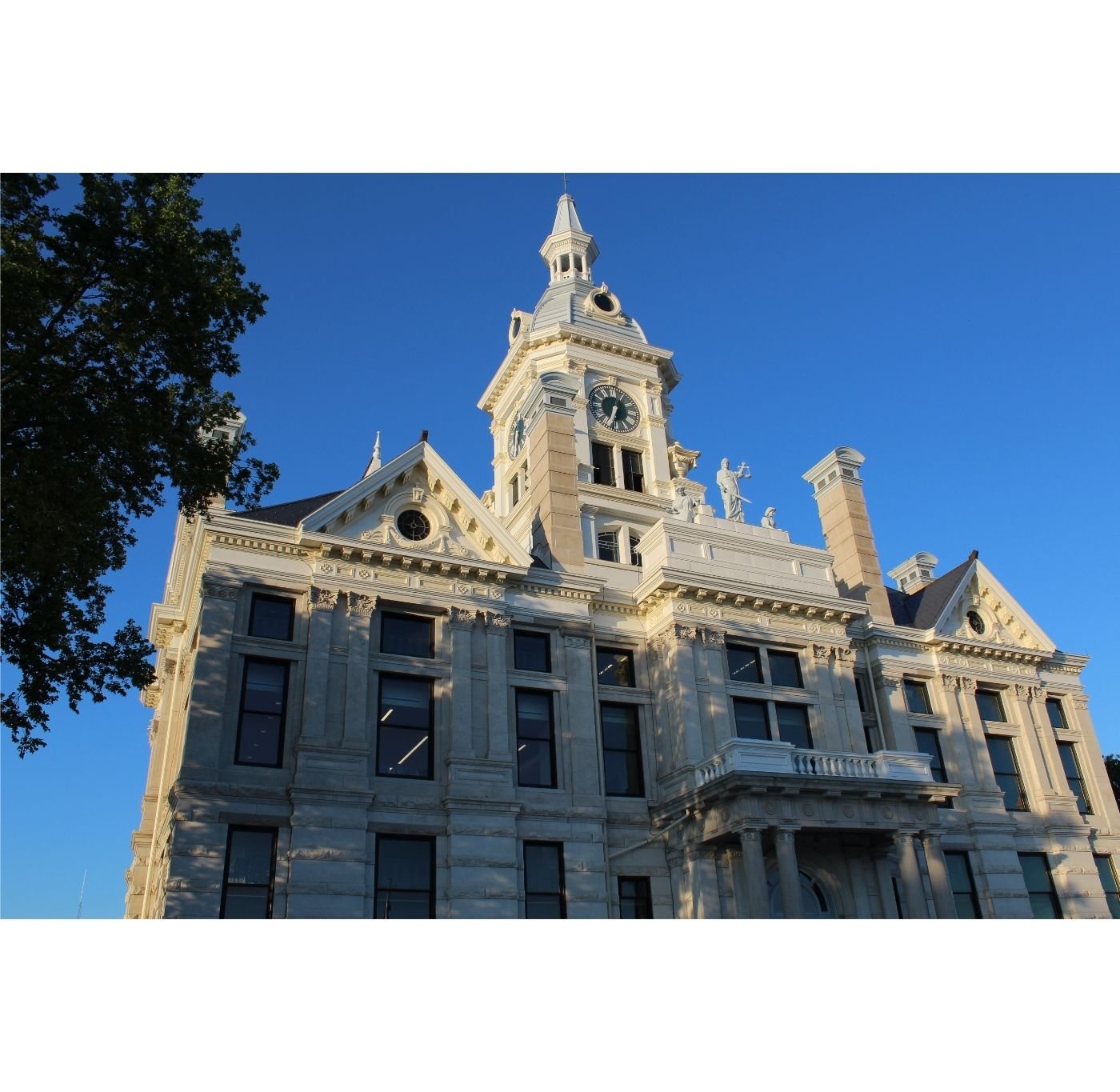
The restored facade — FRP cornice, window surrounds, and ornamental elements matched to original profiles.
Wilson Composites worked directly with OPN Architects and general contractor Breiholz Construction to develop the FRP replacement system. Original stone fragments — salvaged from the tornado damage — served as the basis for profile matching, ensuring dimensional accuracy that drawings alone could not have provided.
The result was a complete FRP cornice system, dormer surrounds, and facade ornamental package that restored the building to its pre-storm appearance. Weight was a fraction of the original stone. Installation was straightforward. The historic character of one of Iowa's landmark civic buildings was preserved.
From street level, the courthouse looks as it did in 1886. The material is different. The building is not.
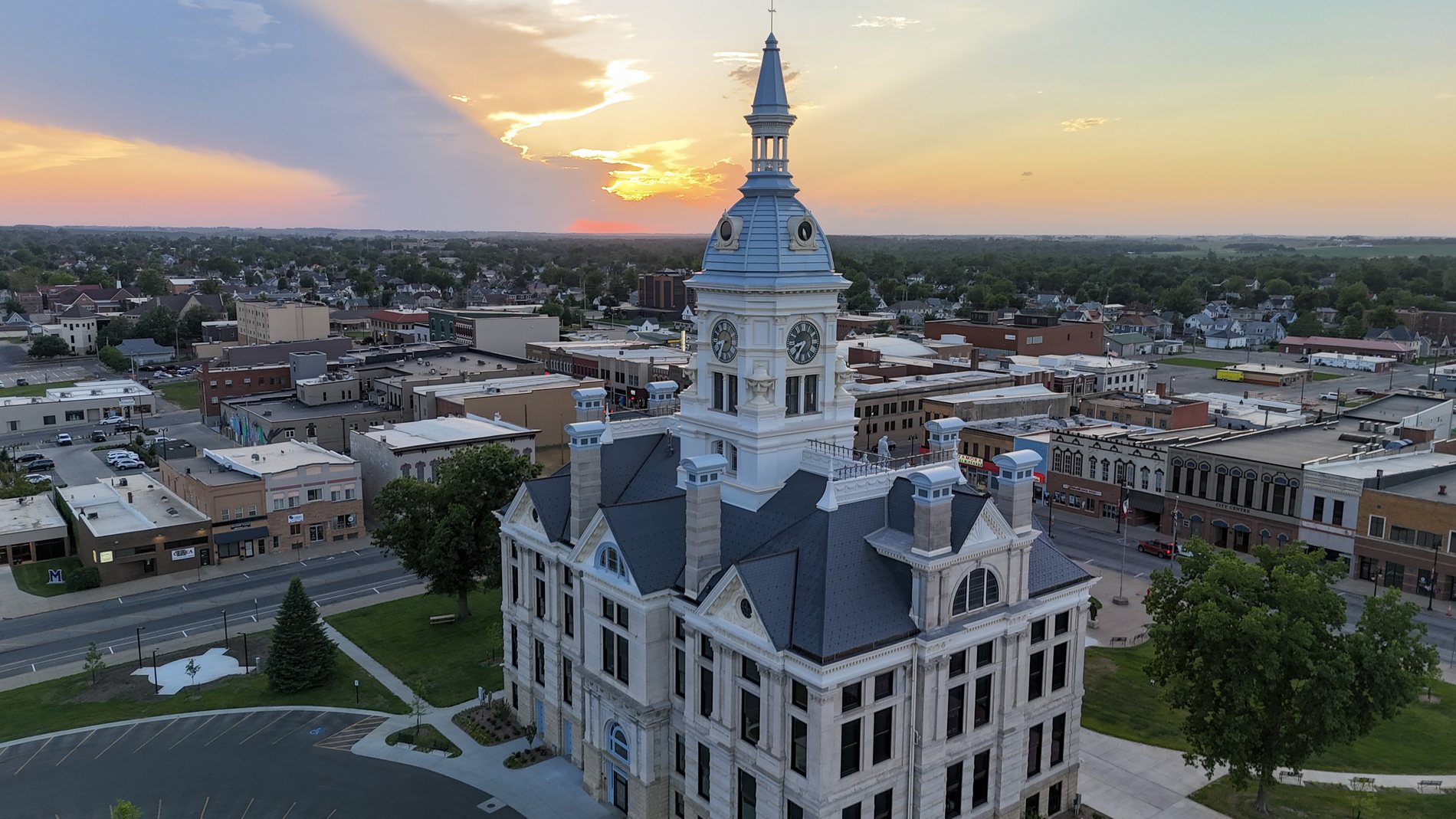
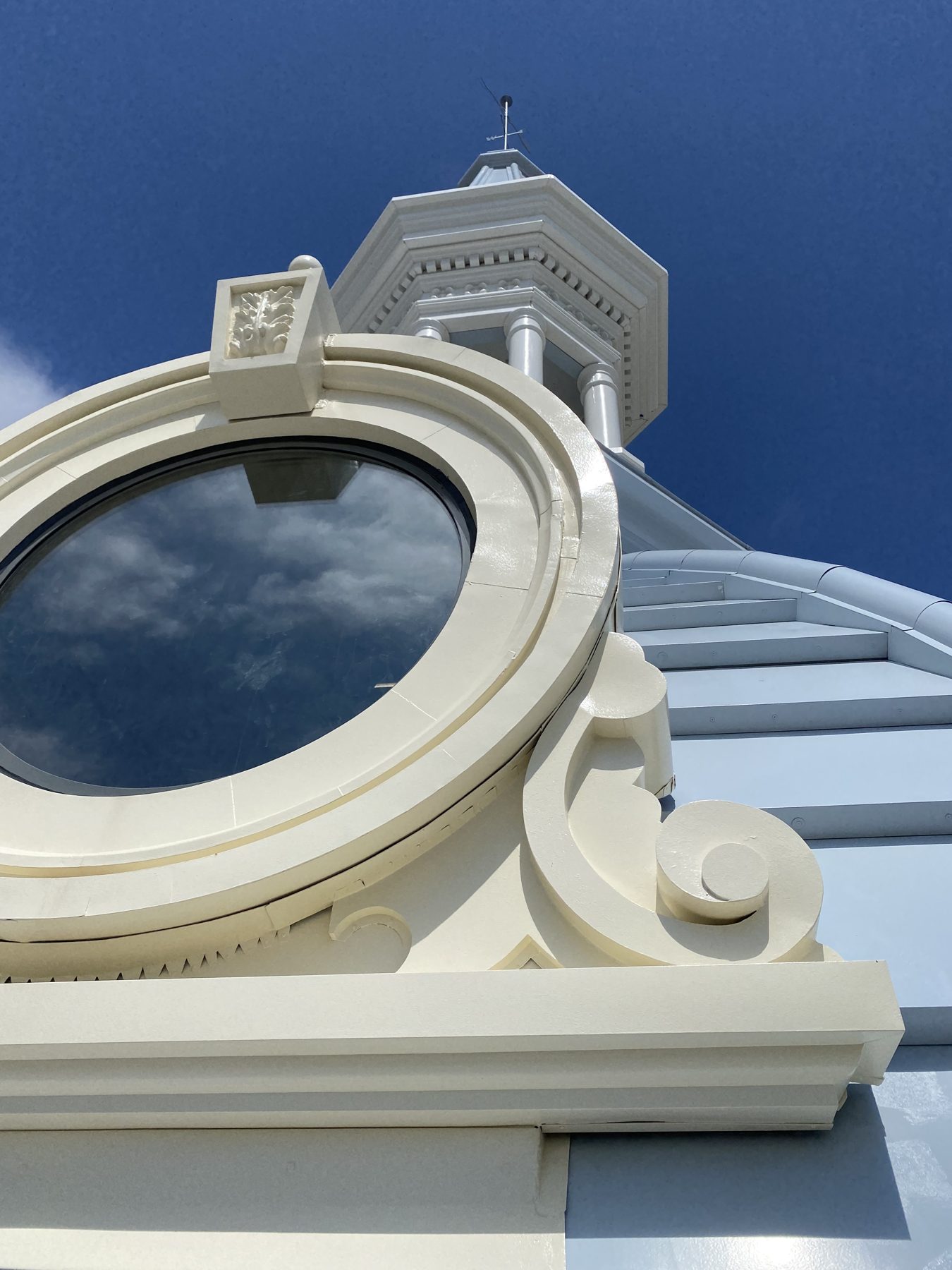
Left: restored facade at street level. Right: FRP dormer surround and oculus detail — fabricated to match original stone profiles.
Weight. Original stone cornices and ornamental elements are heavy. Replacing them in-kind requires structural reinforcement that historic buildings were not designed to accommodate — and that adds cost, complexity, and engineering risk. FRP delivers identical profiles at a fraction of stone's mass.
Profile accuracy. FRP can be fabricated to any profile. Where original fragments survived, they became the molds. Where they didn't, historic drawings and measured profiles guided fabrication. The result holds the dimensional precision that restoration work demands.
Durability. FRP does not rot, rust, or absorb moisture. It holds paint without peeling cycles. On a building expected to stand for another century, the maintenance argument alone makes a compelling case over wood or metal alternatives.